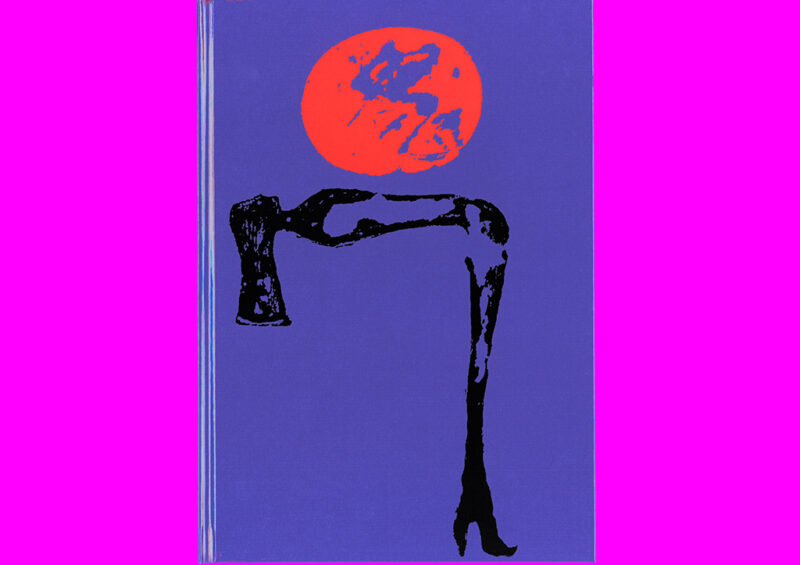
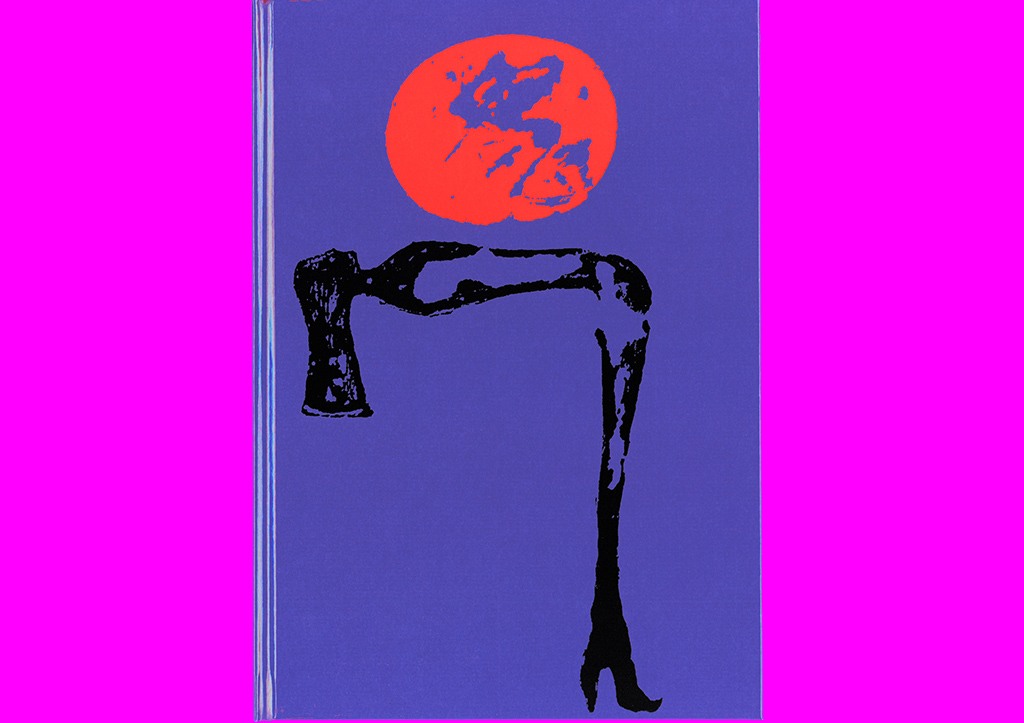
Tom Lebaron-Khérif –
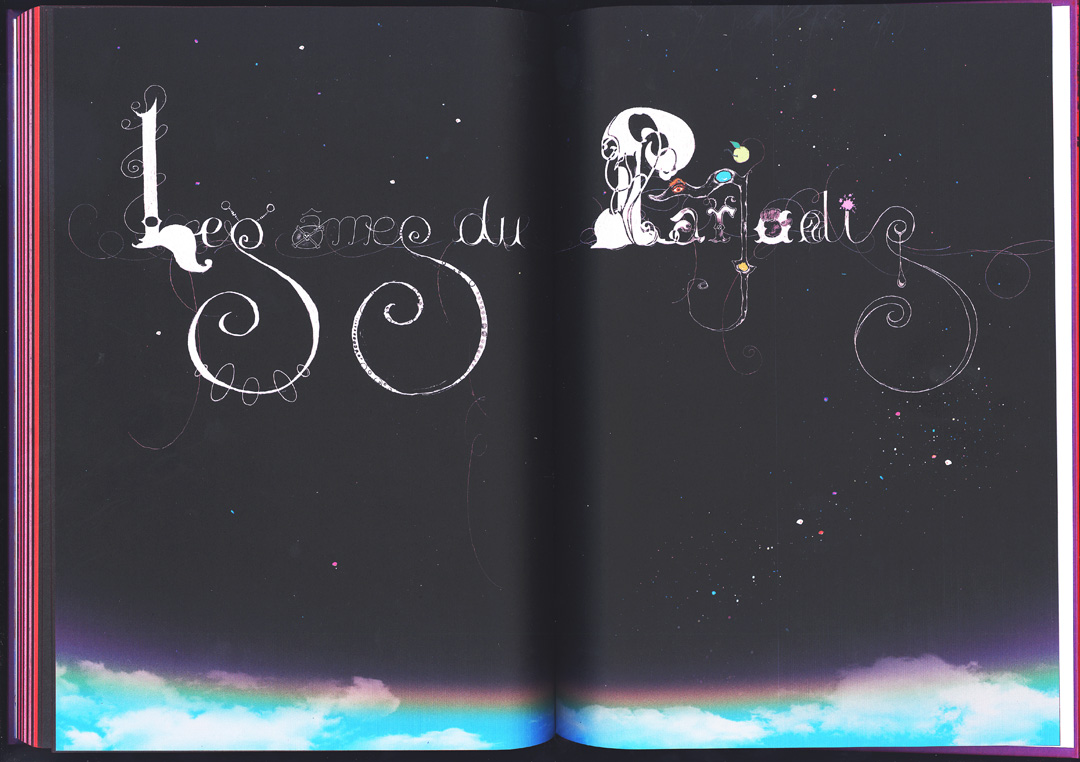
Les âmes du Parjadis
25,00 €
160 pages
Fluo pink colored outer edge
VERY HARD cover
21,5×30,5cm / 8,5×12″
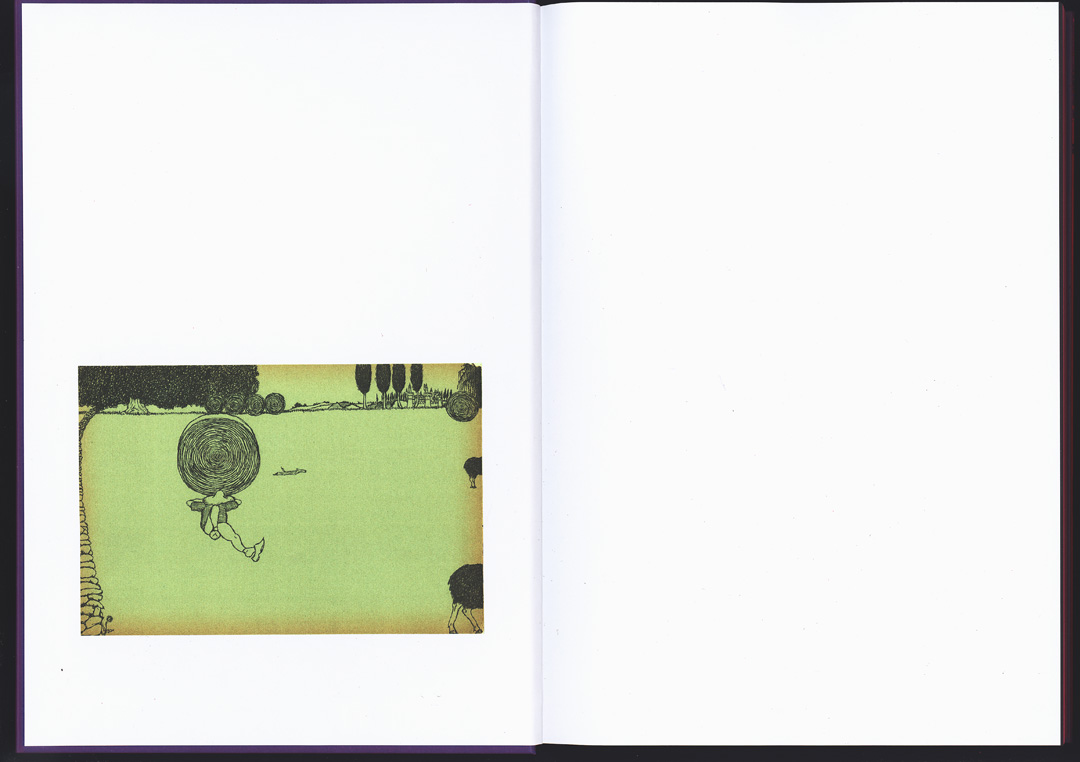
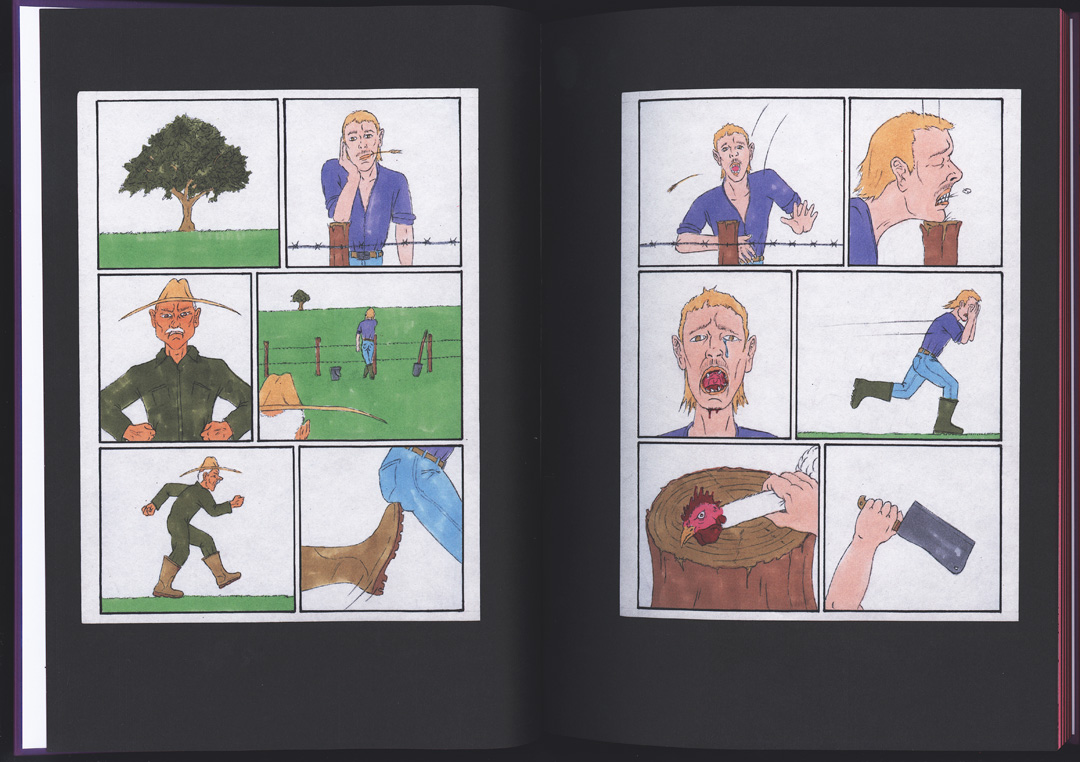
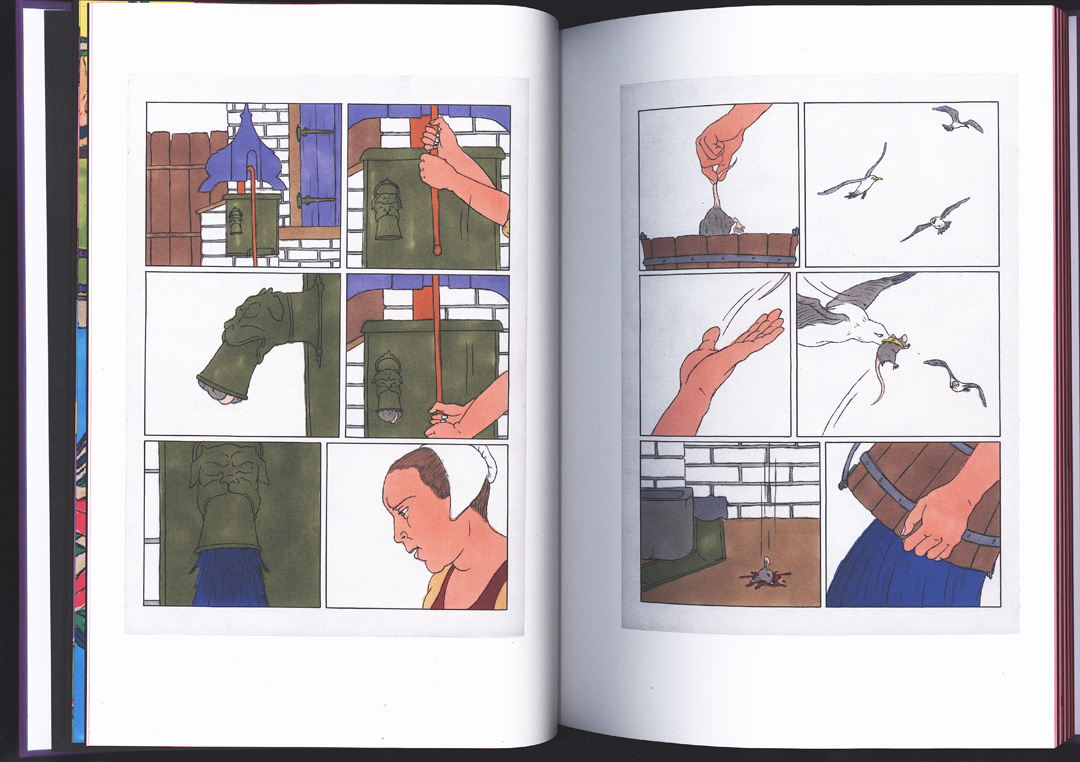
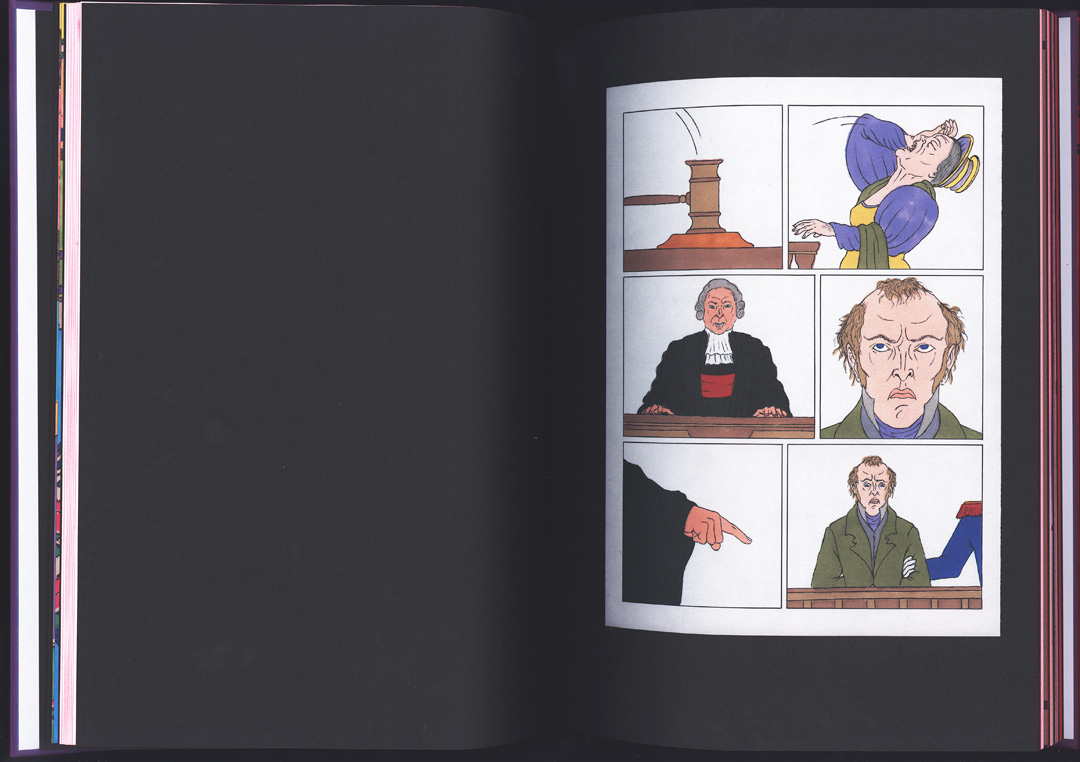
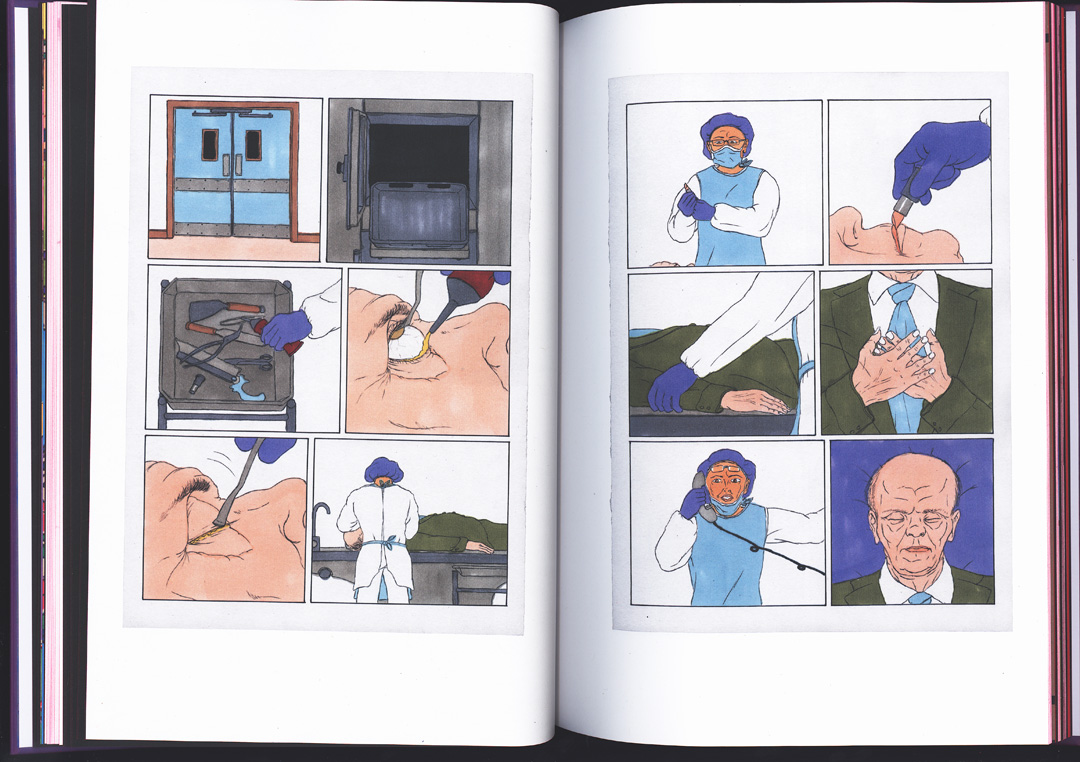
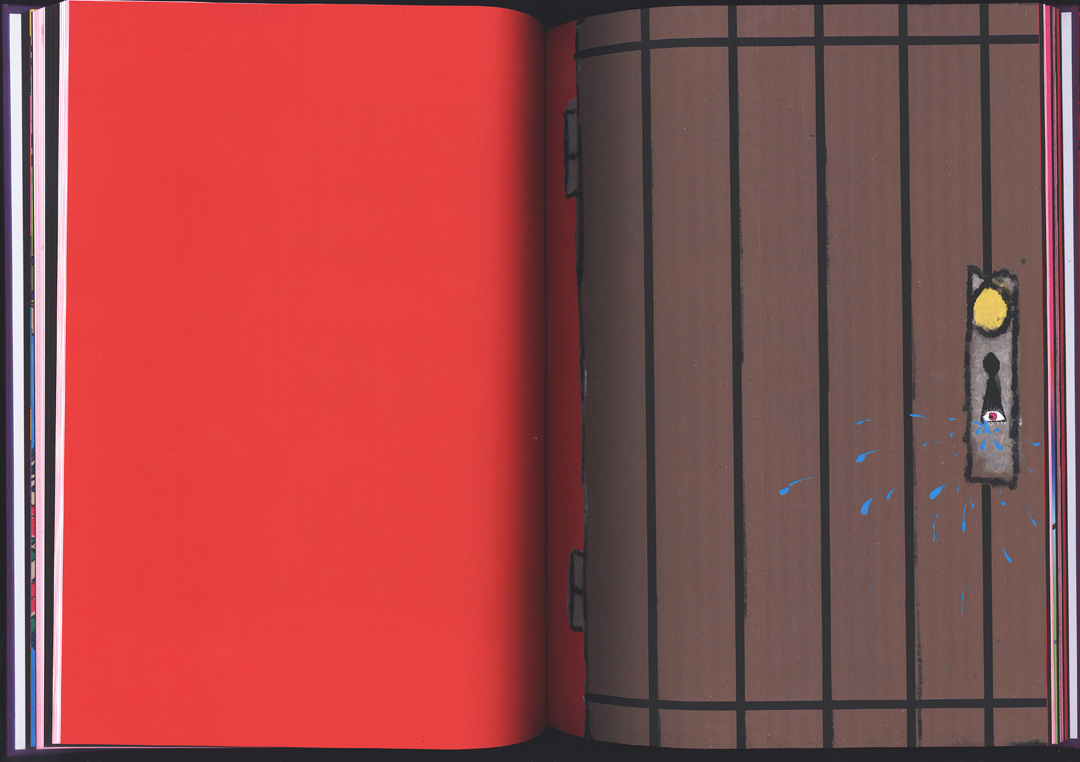
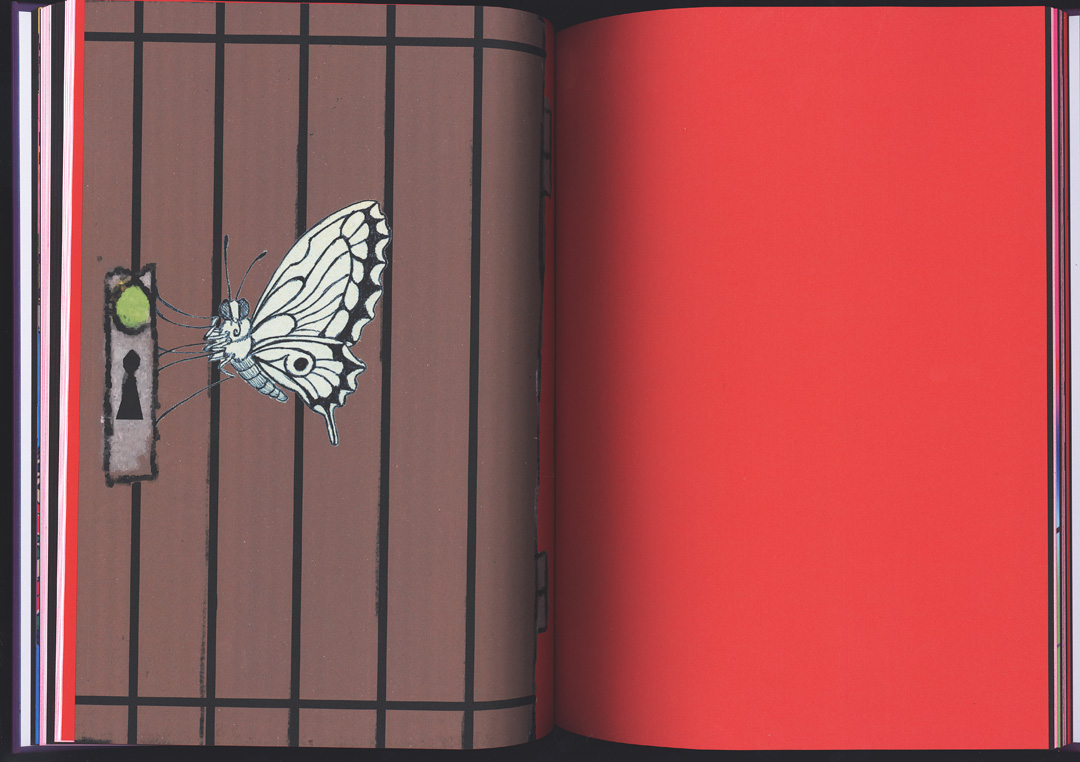
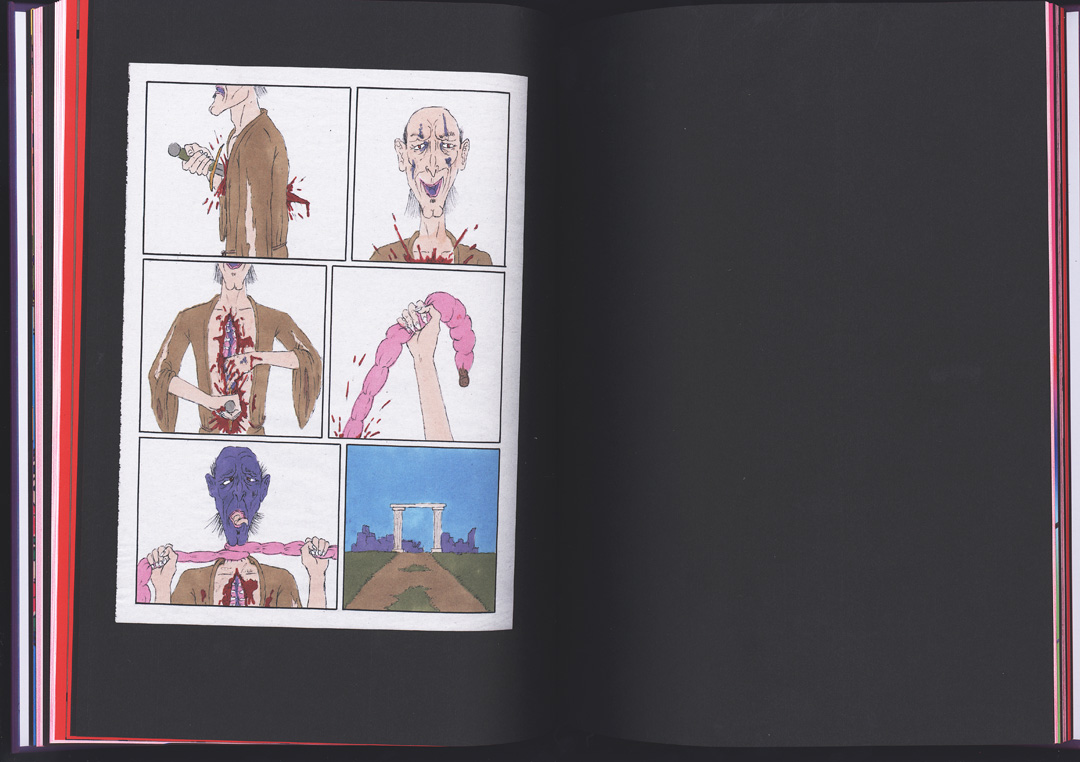
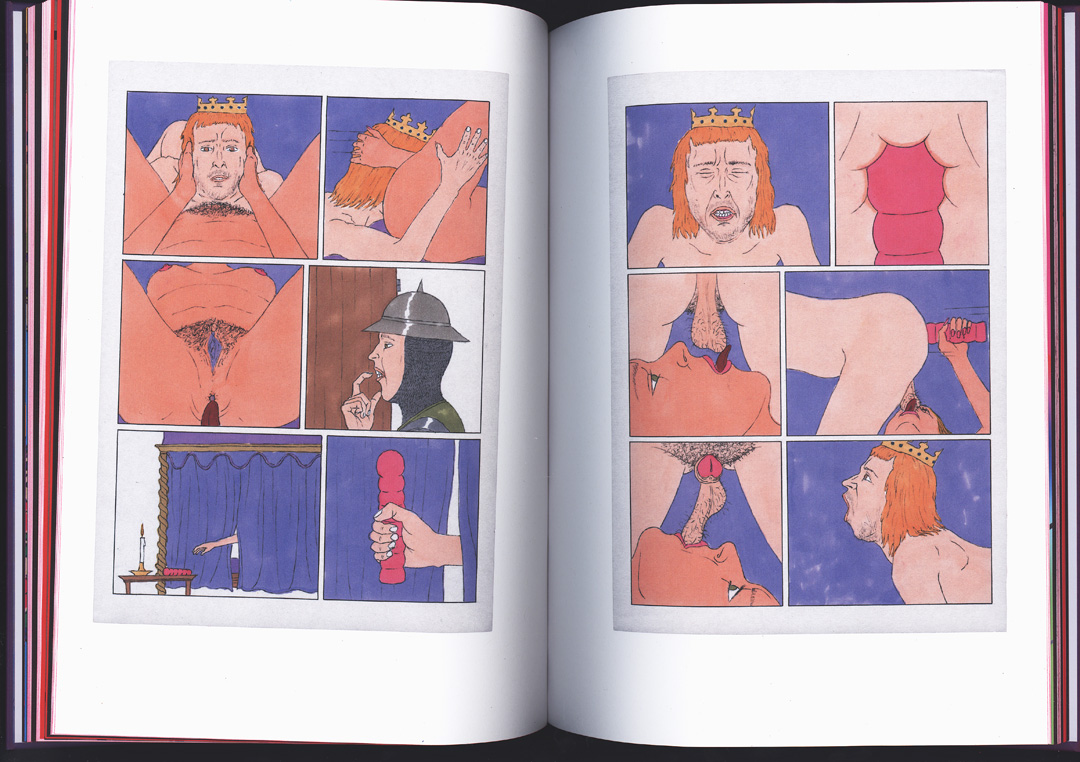
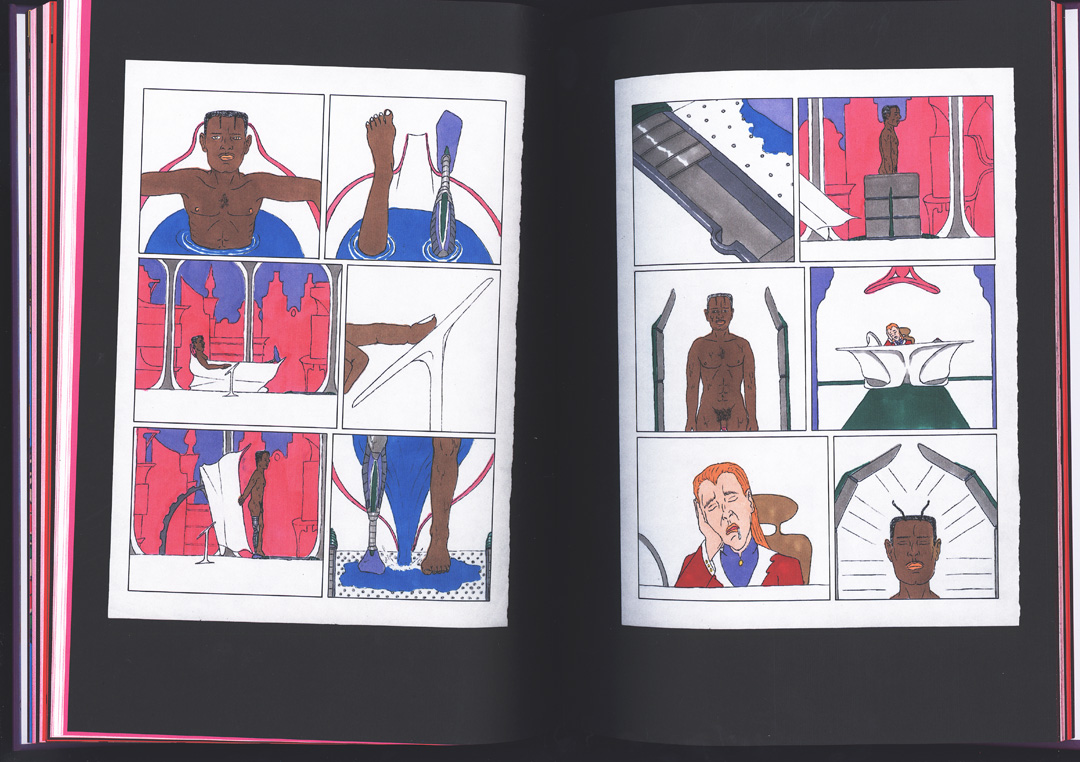
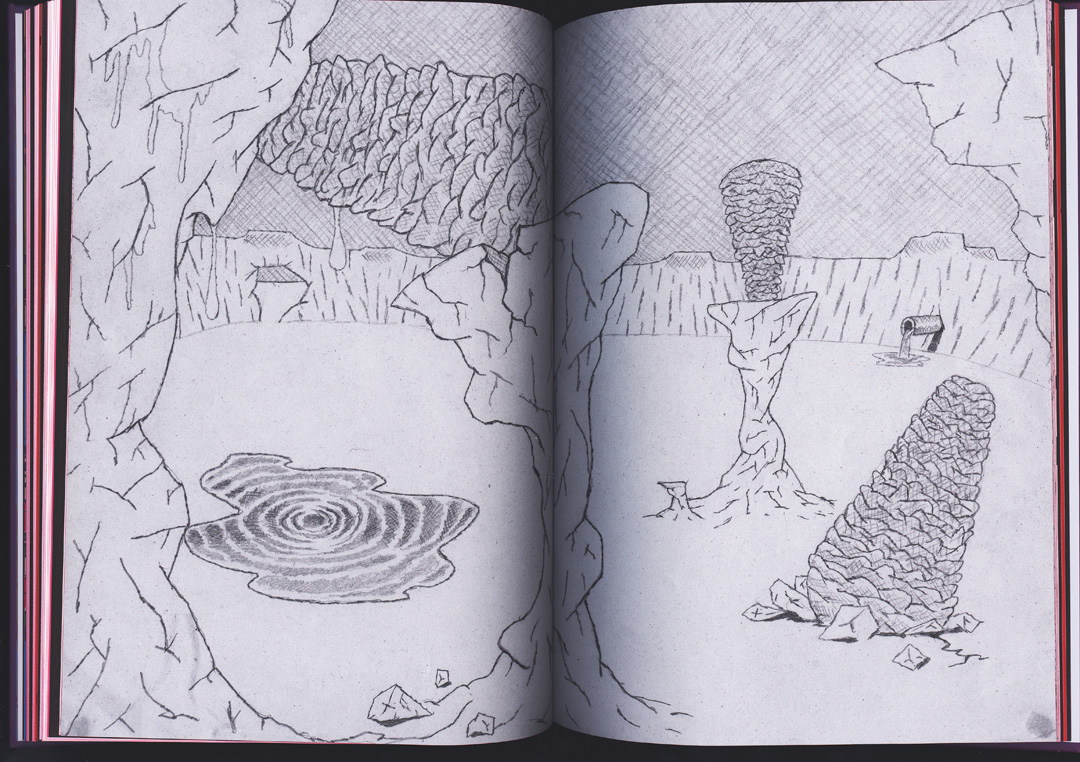
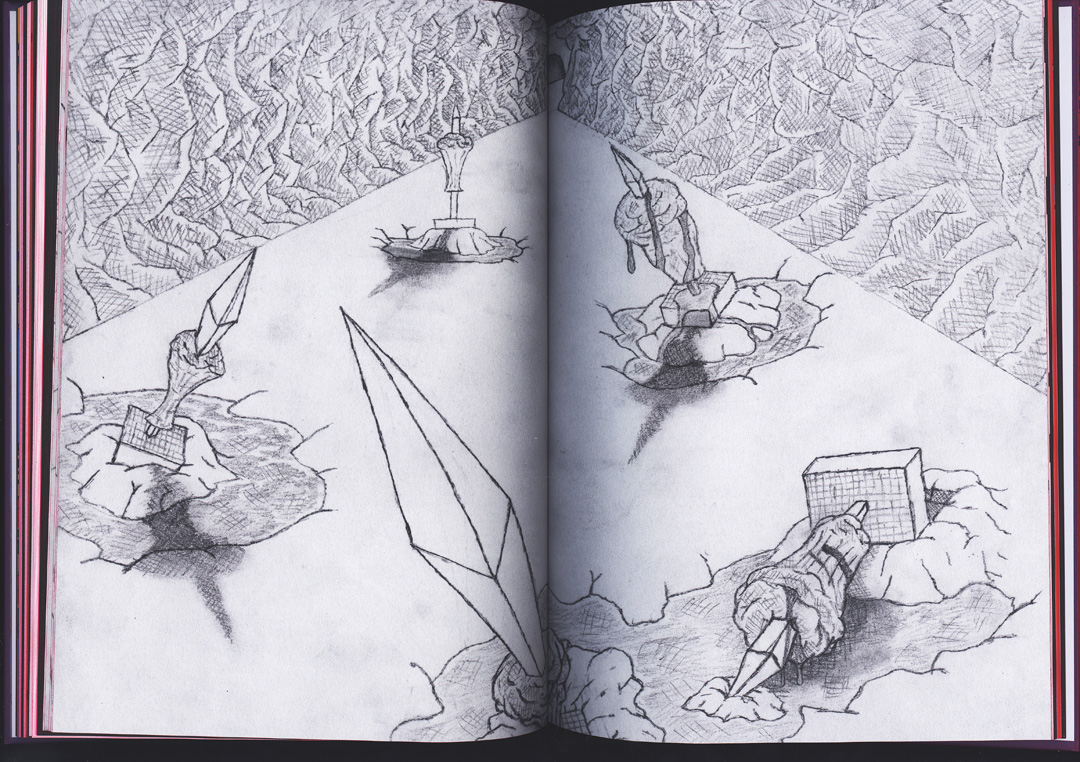
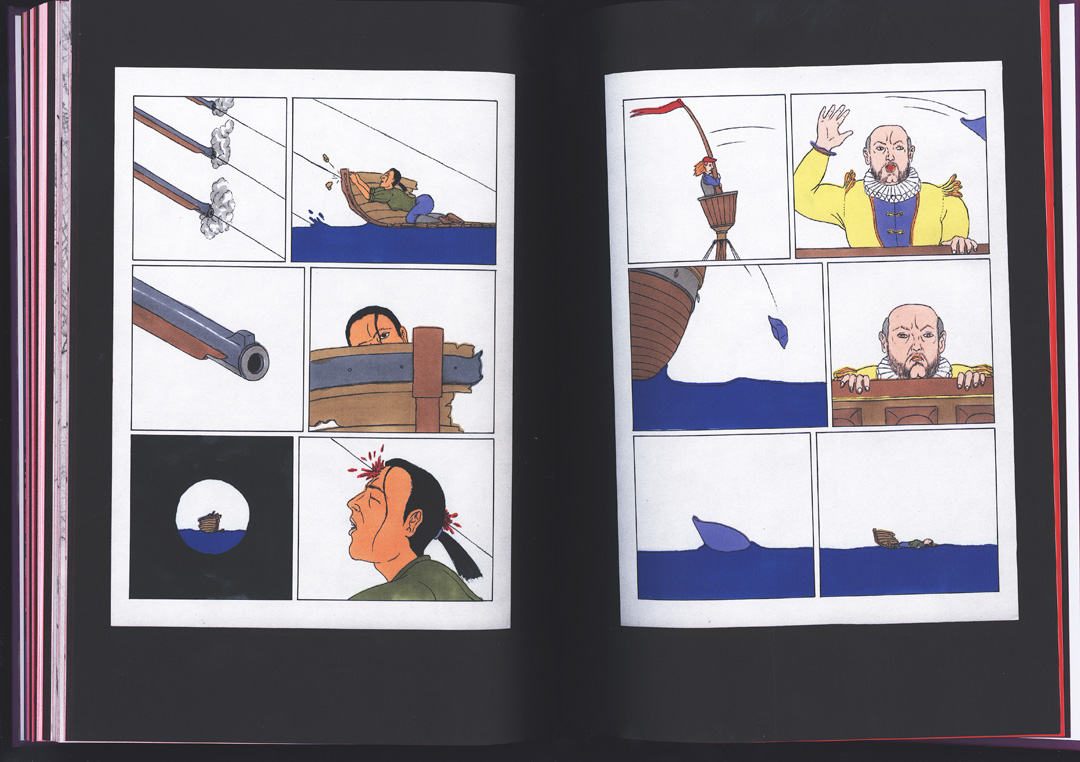
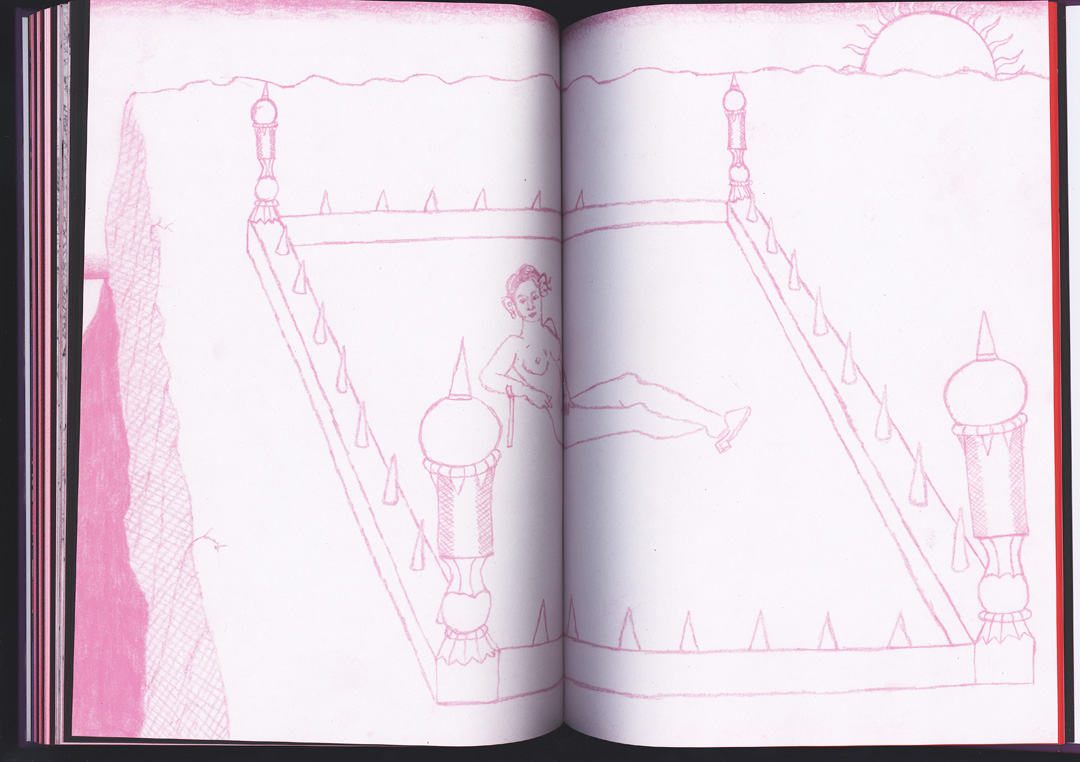
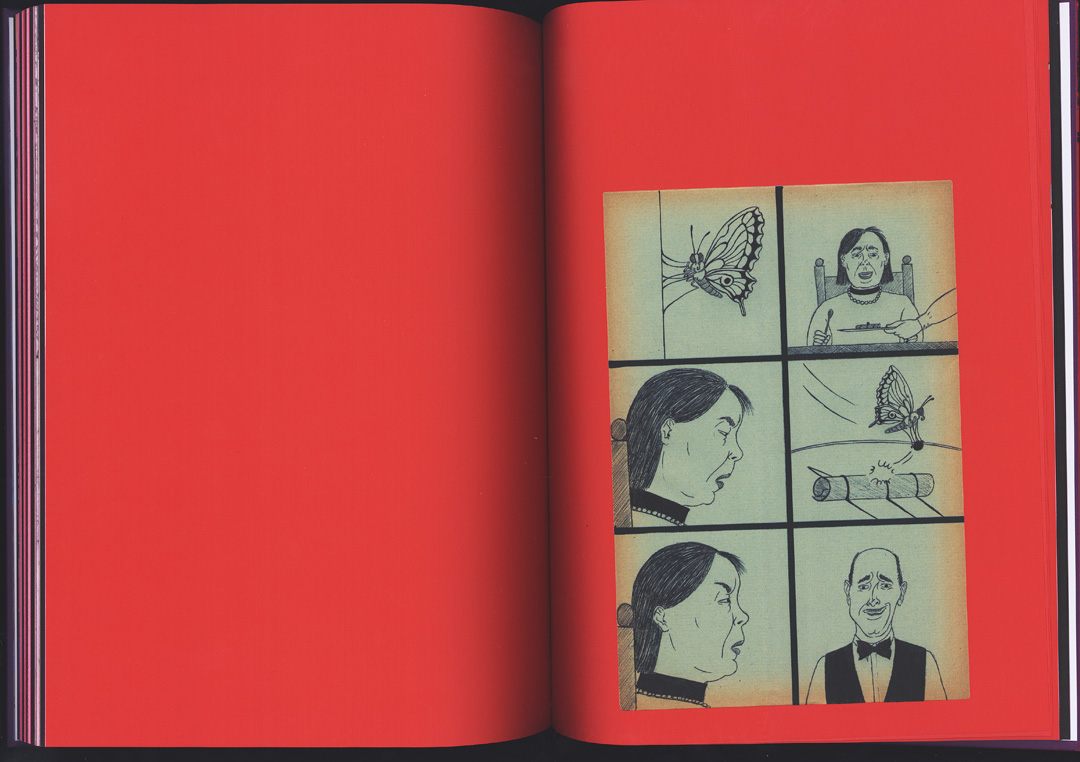
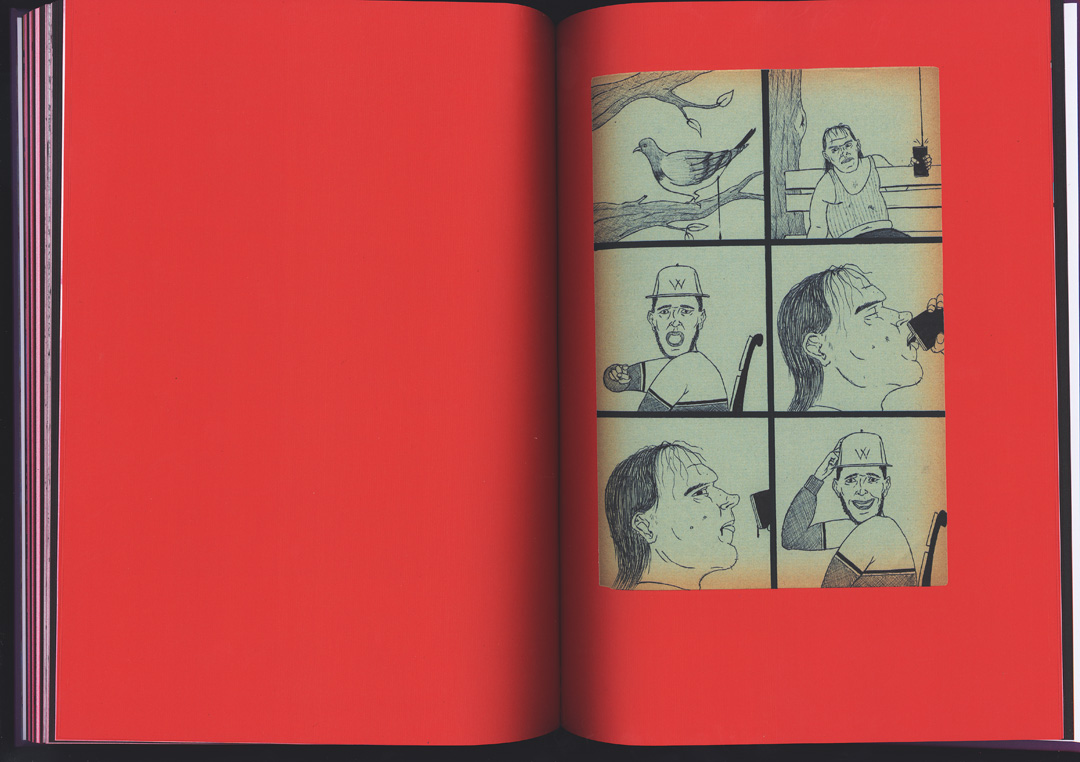
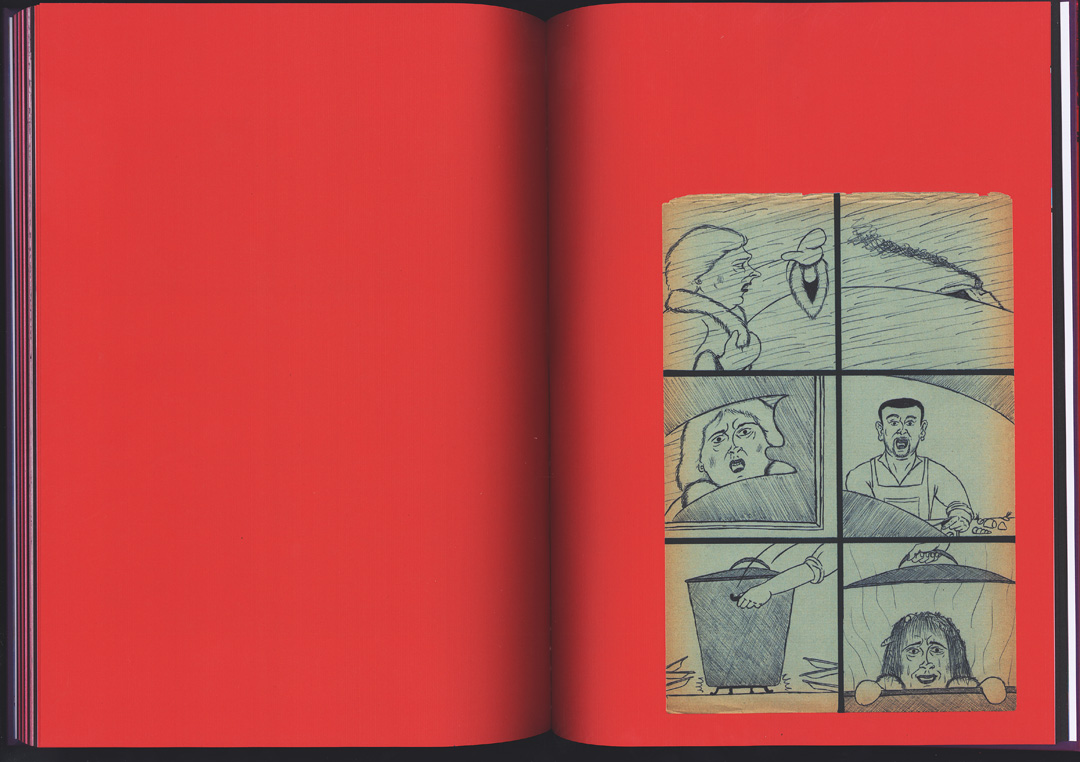
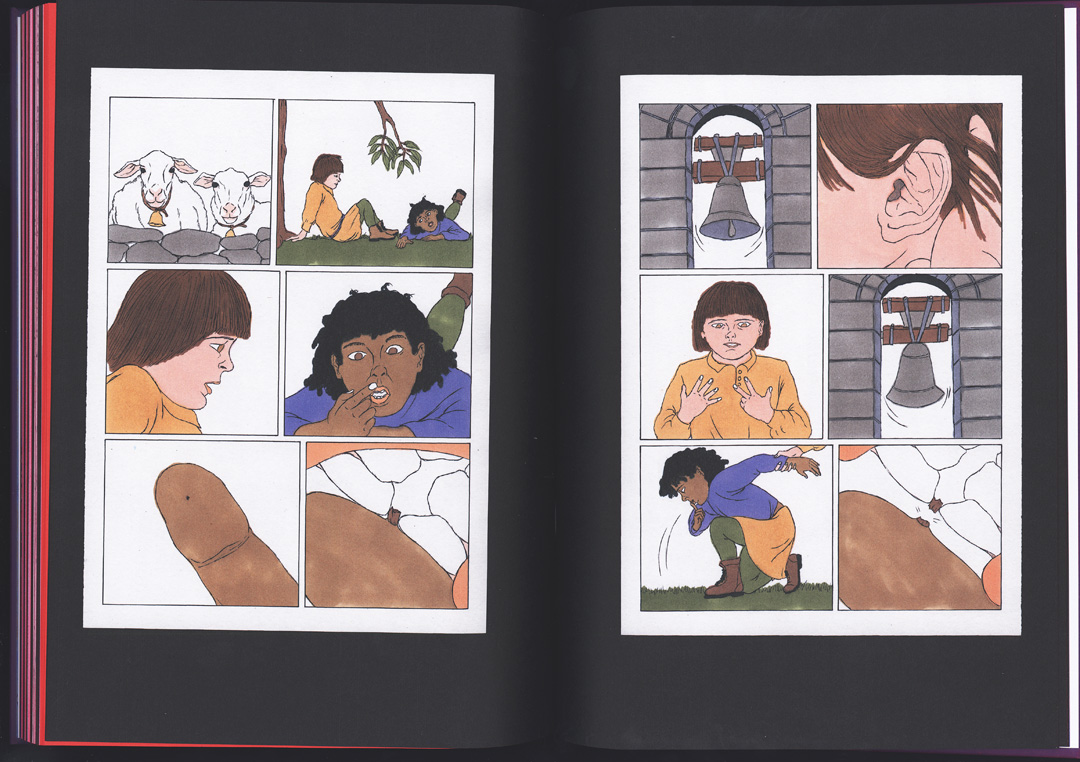
9 mute stories
in parallel universes
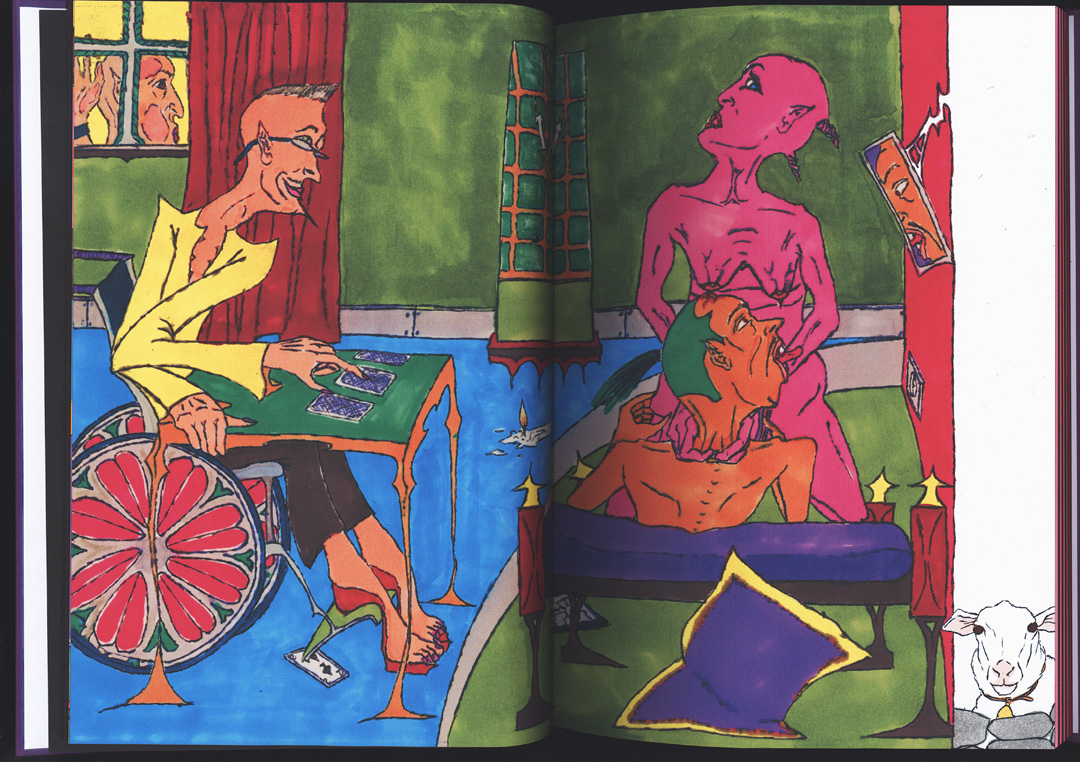
Cowboys, another Milk Lady, Kin & Queeng, Sorèze dans le Tarn, a distant future with automated cars & QR codes, french revolution, pirates, and countryside again.
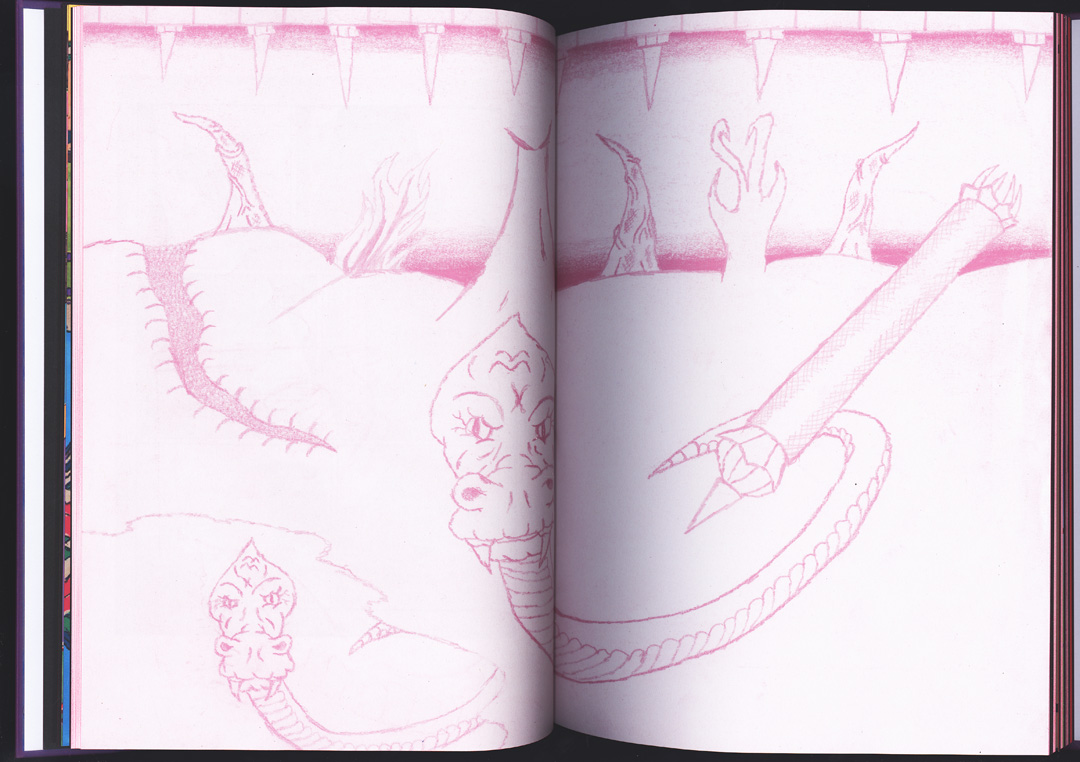
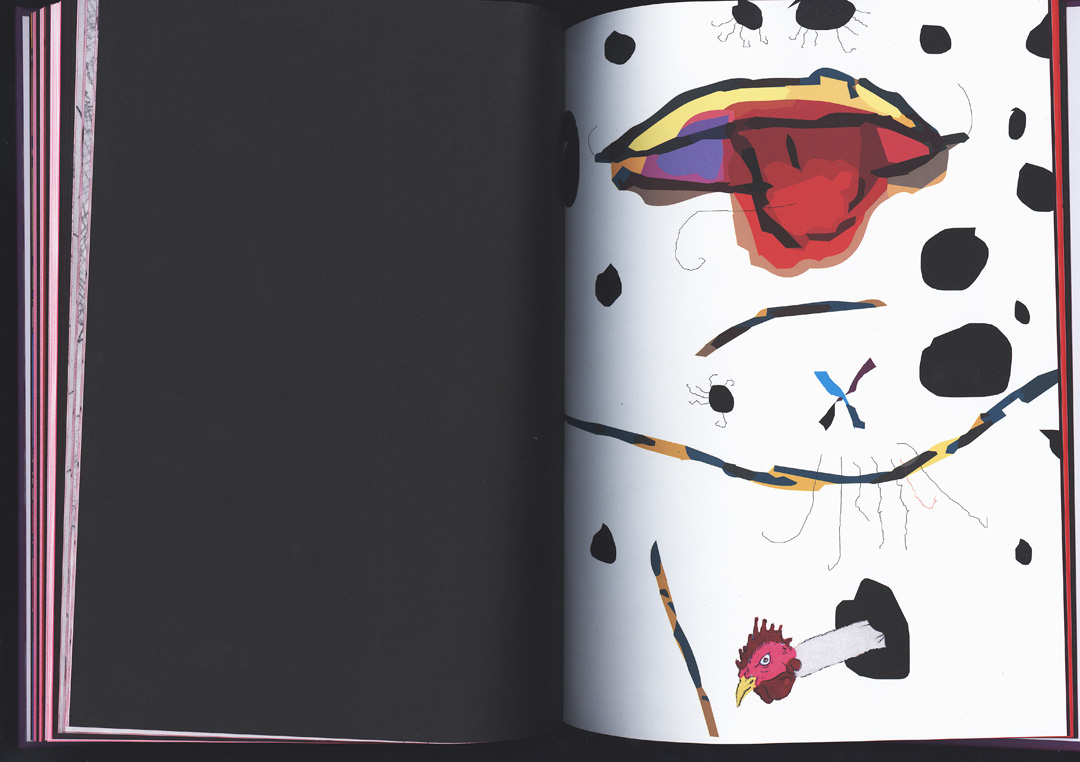
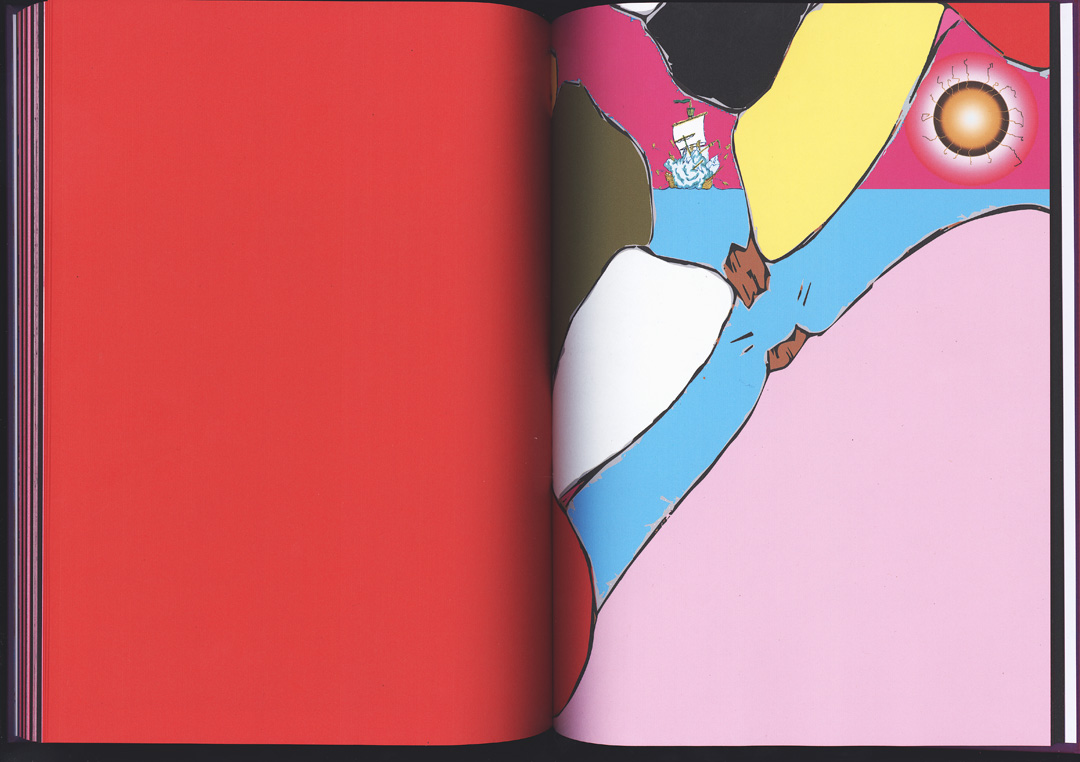
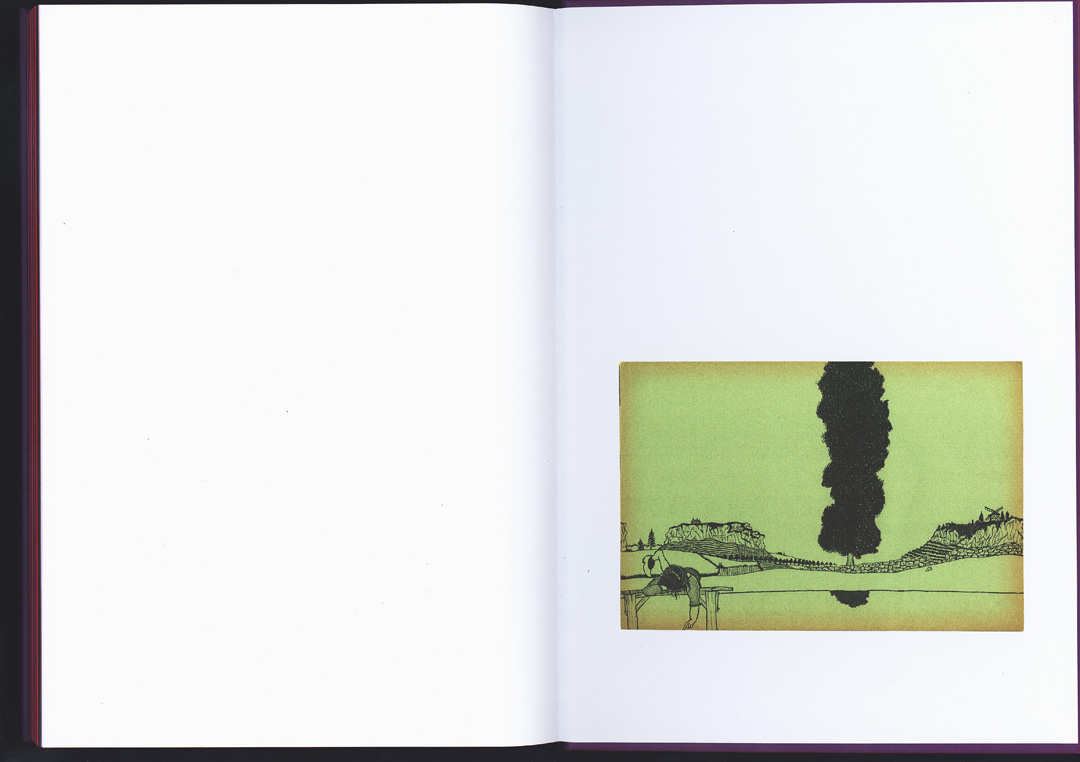
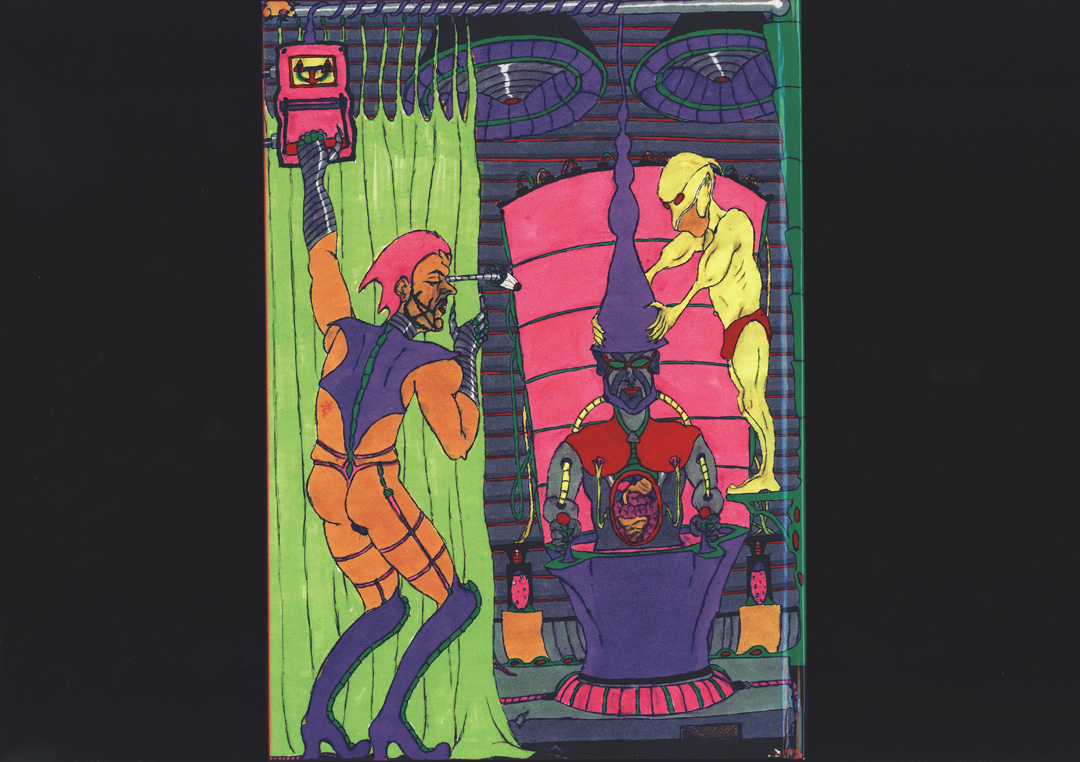
+ a few drawings/paintings (of kebabs yes but not only)
laid out by Boris Betterave, Tomme La Baronne & Tom le Calife
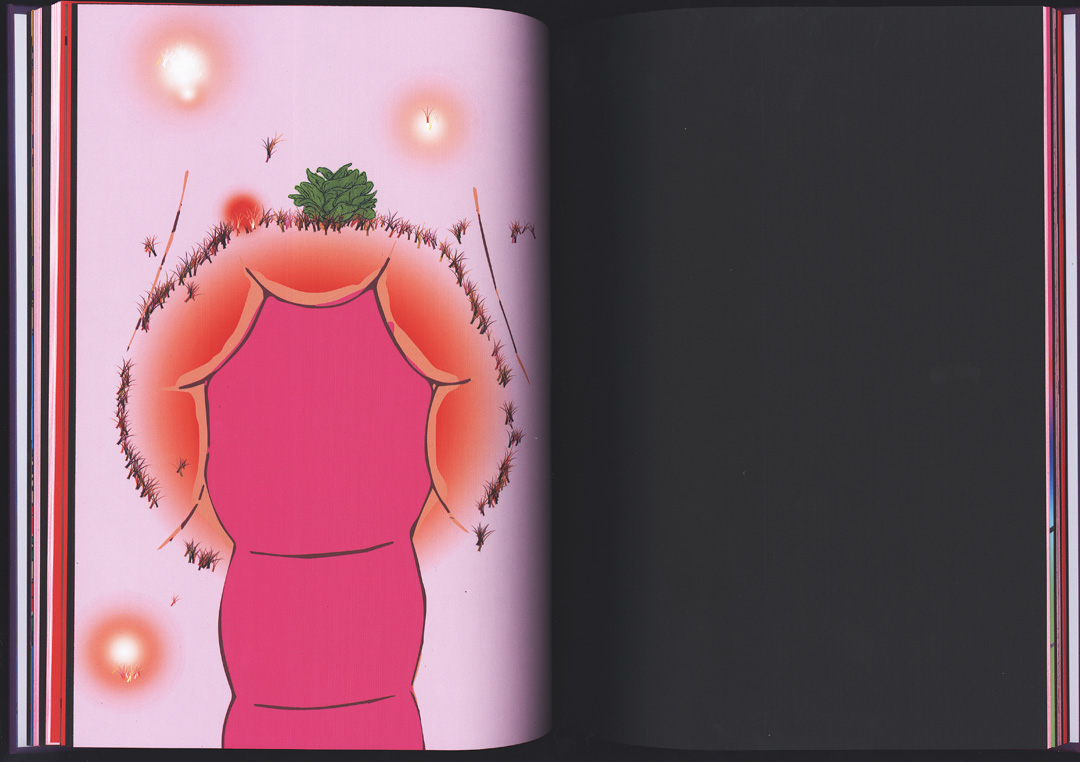
This book presents silent stories drawn by Tom over 3 years.
These 9 narratives are not connected to each other; Tom has taken care to select, as settings for each one, imaginary landscapes that are culturally dissociated. Those distinct stages, if named, evoke something poppy, referring to fantasy worlds codes (pirates, knights, science-fiction, the French Revolution);
though Tom each time refuses to perform their related decorum –
not much irony is involved,
this just doesn’t want to act as a work of fantasmagorie.
What counts is that these worlds are cut from each other; and the details that bring to life the psychology of the characters who populate them.
These details are at once fatal to them, determining; and plainly trivial.
For those who have followed TLK’s artistic development, it’s possible to place it in a continuity operating in rupture with his previous book, L’Arc ou la Flèche (2019), which mainspring was, while being still a work of precision, the play of an absurd, violent and extremely 𝘳𝘢𝘱𝘪𝘥 stupidity. This one goes for slowness (a subject already at work in a more tongue-in-cheek way within Place du marché, Un jour sans marché /2015).
Because of this possibly, the cinematographic influences are more visible here (Tom’s productions can be roughly, but accurately, divided into 2 categories of working processes: comics, video), in the framing, the rhythm, and the choreography of the characters.
The register is much more rarely that of the gag; if it sometimes seems to be in play, it’s only to be deflated in favor of a melancholic, or simply flat, suspension of the narrative.
The stories feel mostly nourished by daily social observations, neutrally consumed.
Class struggle (the acidity of class permanence) seems to be a recurring topic.
Due to the aridity of its aesthetic in and outs, once beyond its vaguely funky coating, this book thus requires sometimes a little bit of focus to be read correctly; like my own vagina, it is dry.
Related products
-
Ulysse Müller –
EURODANSE
30,00 € Read more -
Hardeep Pandhal – Leomi Sadler – David Steans –
Ma go est… un bigorneau ?!?
30,00 € Select options This product has multiple variants. The options may be chosen on the product page -
Antoine Marquis –
J’adore PARIS
25,00 € Add to cart